Q-Drama: QUERELLE (1982)
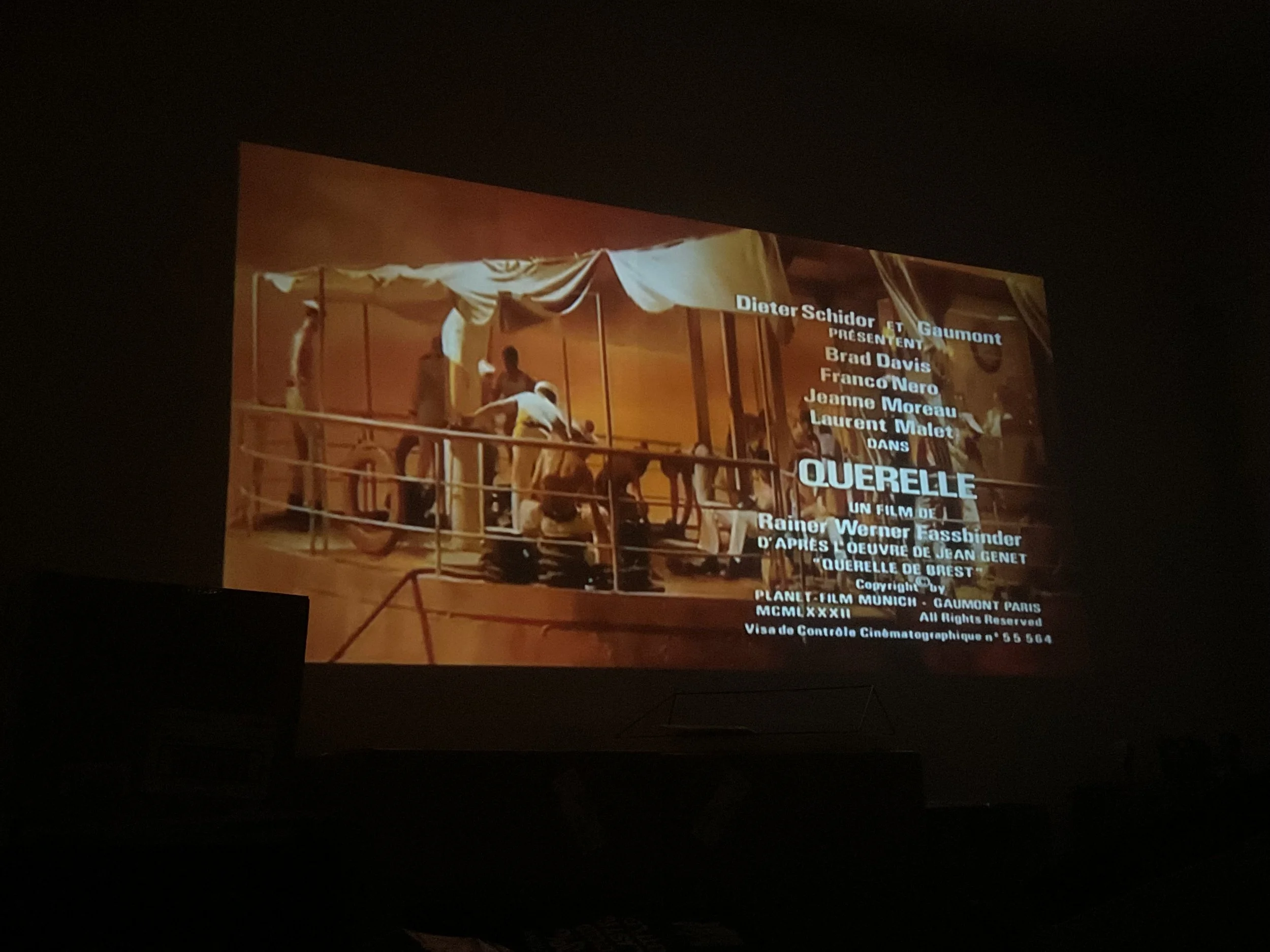
Why is Günther Kaufmann not among the top-billed actors?
Yeah I don’t think Fassbinder is for me. Yet another coincidence in this Forcing-Myself-to-Watch-Movies saga: the drama that starts with Q ended up being QUERELLE (1982) by Rainer Werner Fassbinder, the prolific film director I was first introduced to via the biopic that starts with an E, ENFANT TERRIBLE (2020)!
Now that I’ve actually seen a film by Fassbinder, I start to realize what ENFANT TERRIBLE was about, and to understand the artistic choices Oskar Roehler made when he directed it. In my post about it, I did write:
“In ENFANT TERRIBLE, every set of every scene feels like the stage of a play. The film direction and the decor make me feel like this is a theatre play that happened to be filmed. Whenever characters interact, it feels like they're acting. It never stops being about acting and directing. Neither film allows you, even for a second, to forget that none of this is real. It's as if suspension of disbelief would be a crime.”
I have yet to watch another Fassbinder film, but I had the exact same observation while watching QUERELLE. The resemblance between Michael Klammer, the mixed-race Black actor playing Günther Kaufmann in ENFANT TERRIBLE and Günther Kaufmann (1947-2012) himself who plays Nono in QUERELLE, is uncanny. So here's a belated shout-out to Michael Klammer for his remarkable portrayal of Günther Kaufmann in ENFANT TERRIBLE—and to the wardrobe, hair, and makeup departments for making that astonishing resemblance possible.
Zzzzzzz
I don’t have much to say about QUERELLE except:
Just like ENFANT TERRIBLE, it was a snoozefest for me. I think the combination of theatre-like staging and performances with a slow pace just doesn’t work for me. A slow pace can be incredibly effective in ORLANDO (thanks to its mindblowing soundtrack) or CALL ME BY YOUR NAME (my favorite movie, so you see, I do like things slow). Slow doesn’t mean boring. But I’m not sure I would enjoy a theatre play with that same kind of pacing either. And so far, it seems like Fassbinder films plays. (I realize the phrasing is confusing. Films here is a verb, and plays a noun). Which is also part of the queer aesthetics I was talking about in my review of PROBLEMISTA.
The only thing that would keep me awake was a scavenger hunt I threw myself into, looking for erected penises in every shot:
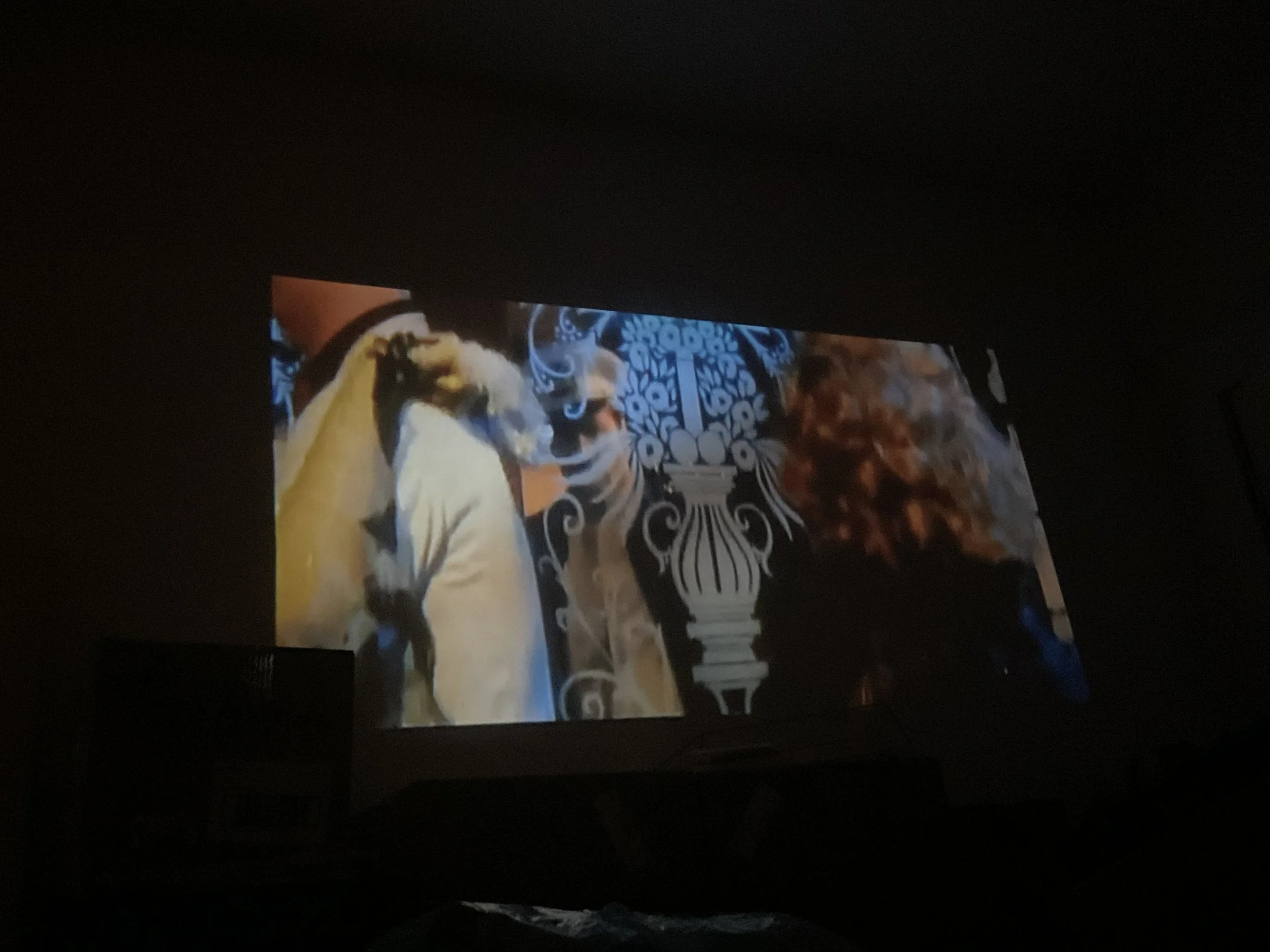
That’s Jeanne Moreau seen from behind, by the way…
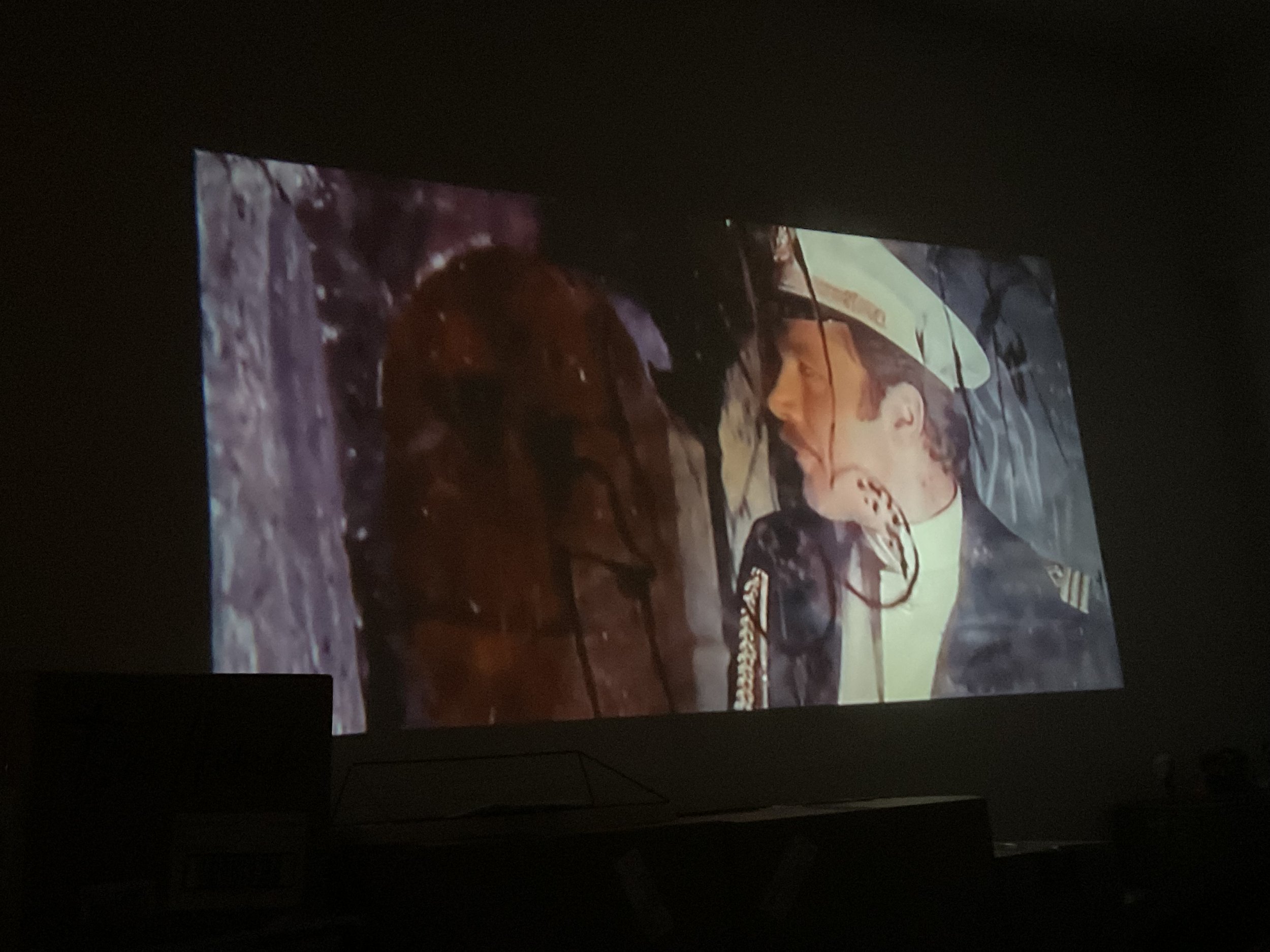
Franco Nero plays Lieutenant Seblon
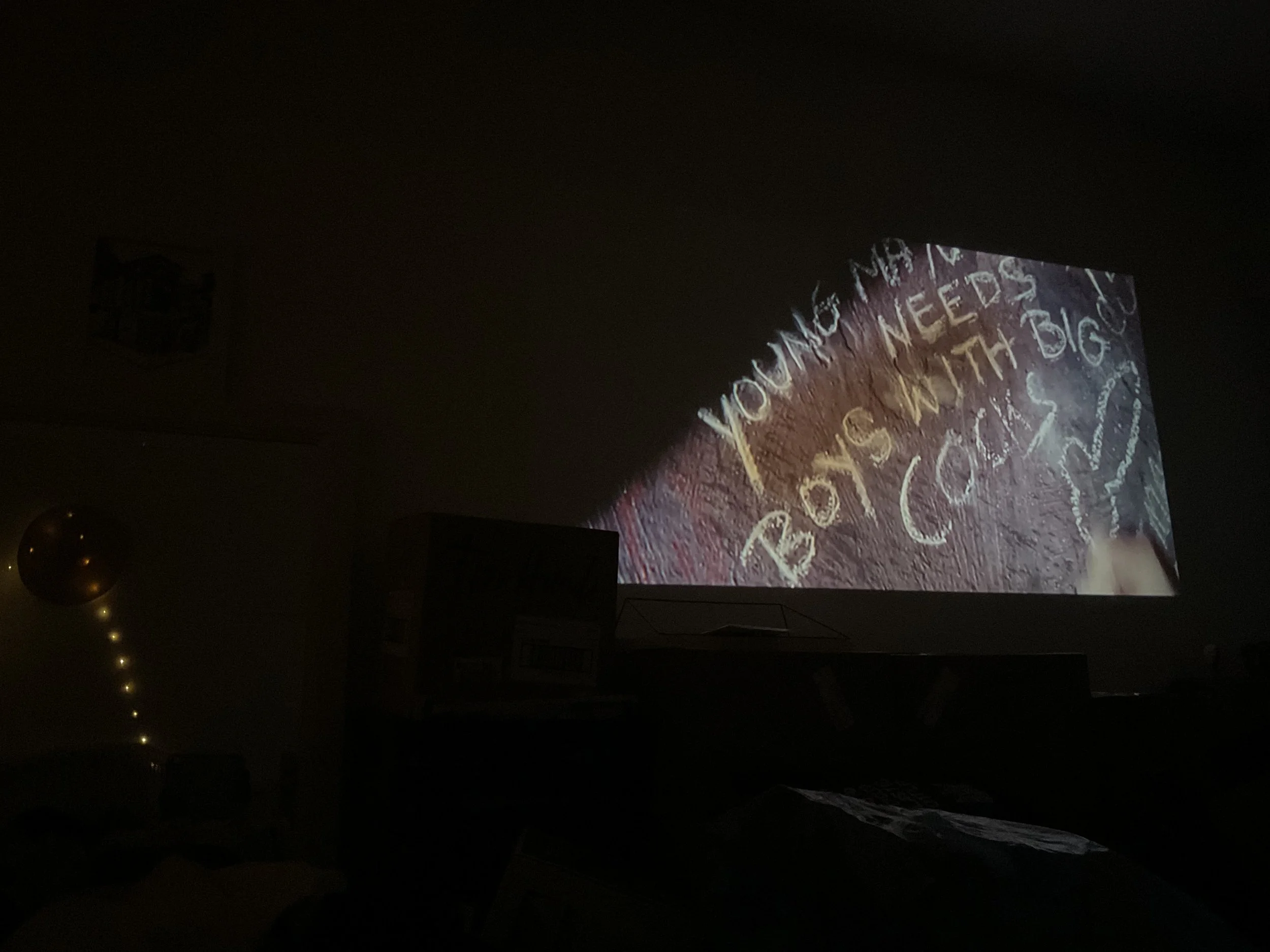
I doubt that André Gide wrote that
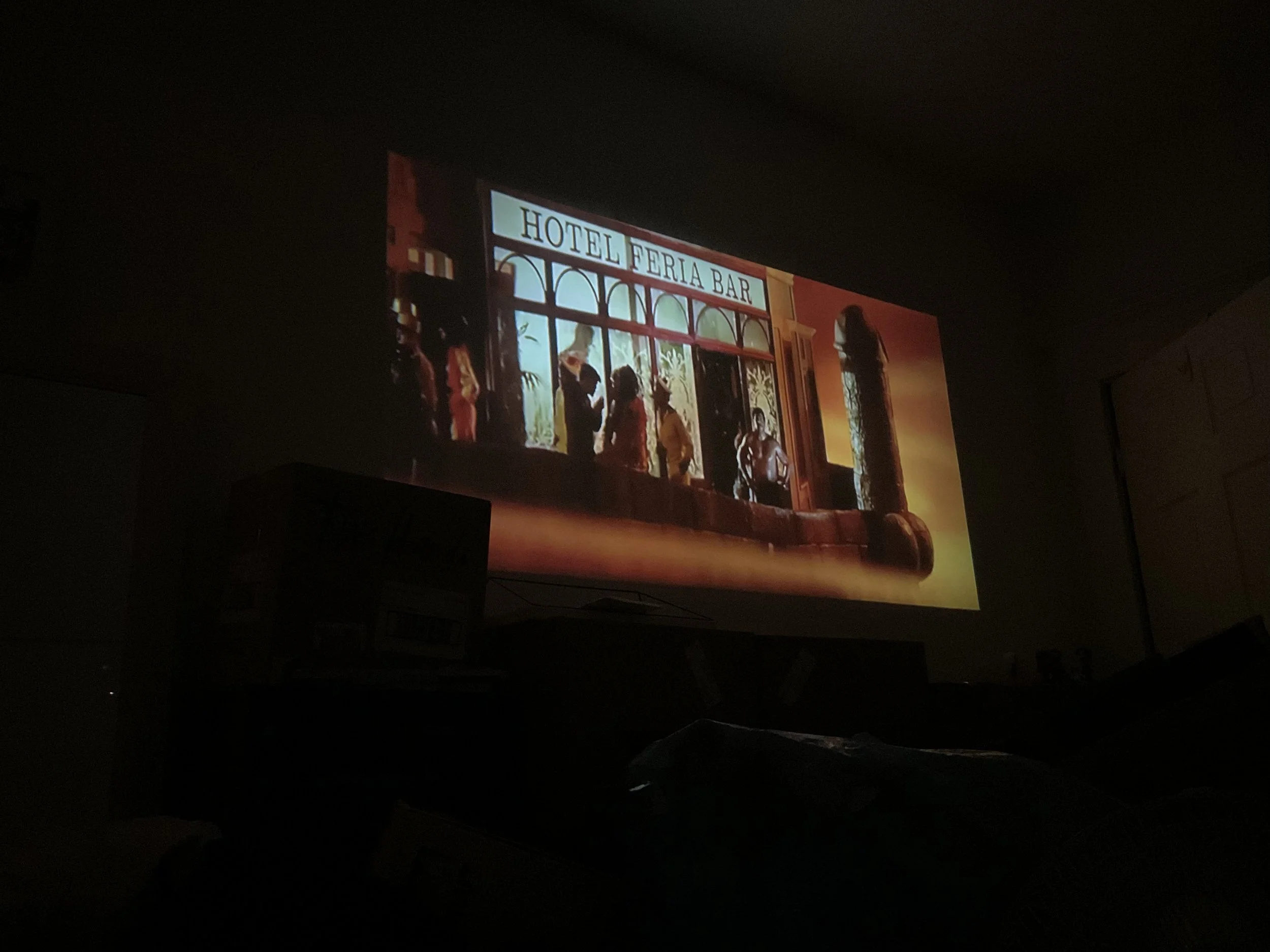
That’s a big one
I don’t know if any other Black actor portrayed homosexuality before Günther Kaufmann, but it was nice seeing Black queer representation in a German movie from 1982, where the Black one tops the white without the white one ordering it (Nono was in charge, he was the boss of Hotel Feria Bar, and Querelle was just the brother of the man screwing his wife—played by Jeanne Moreau).
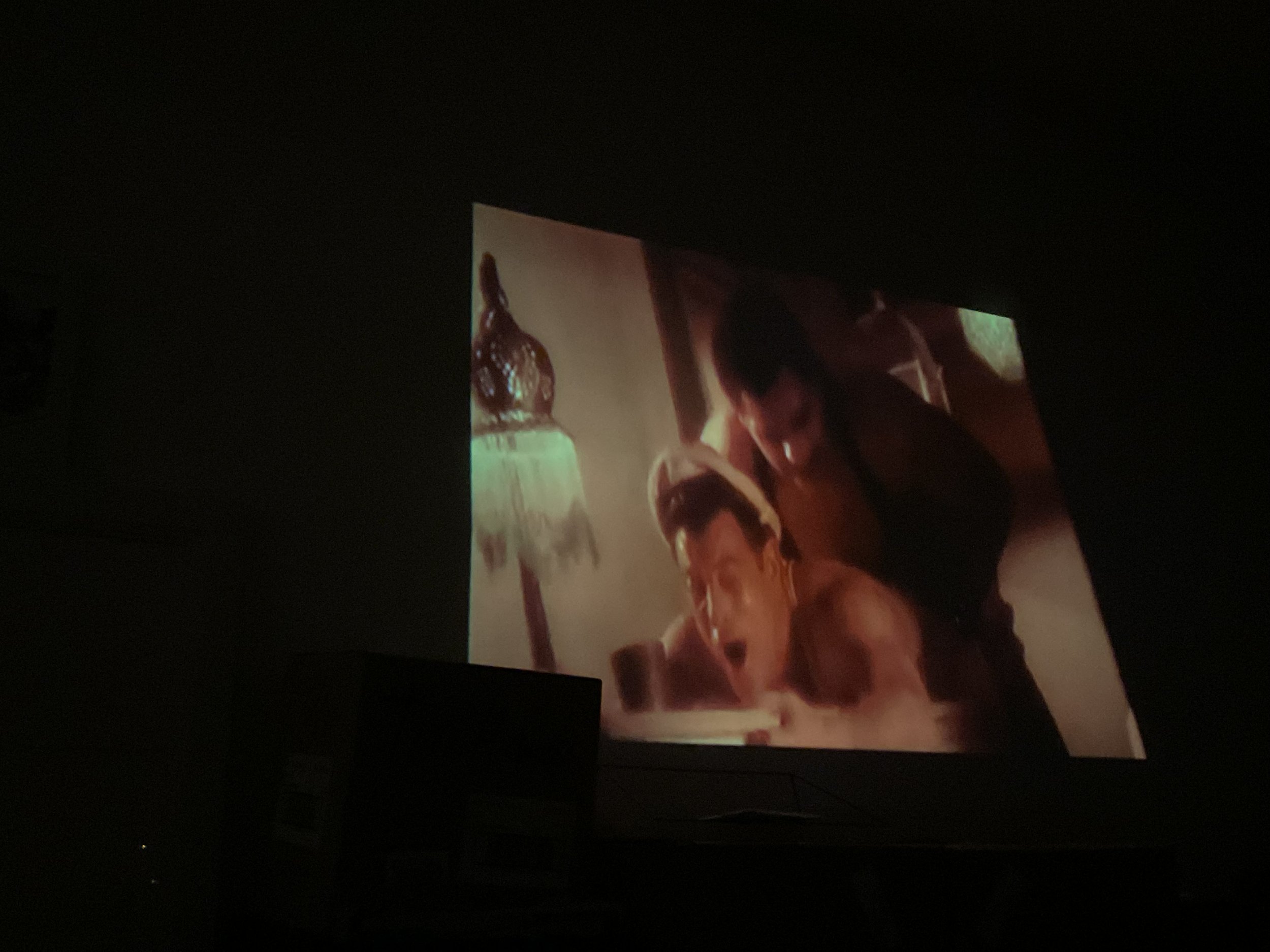
That was good.
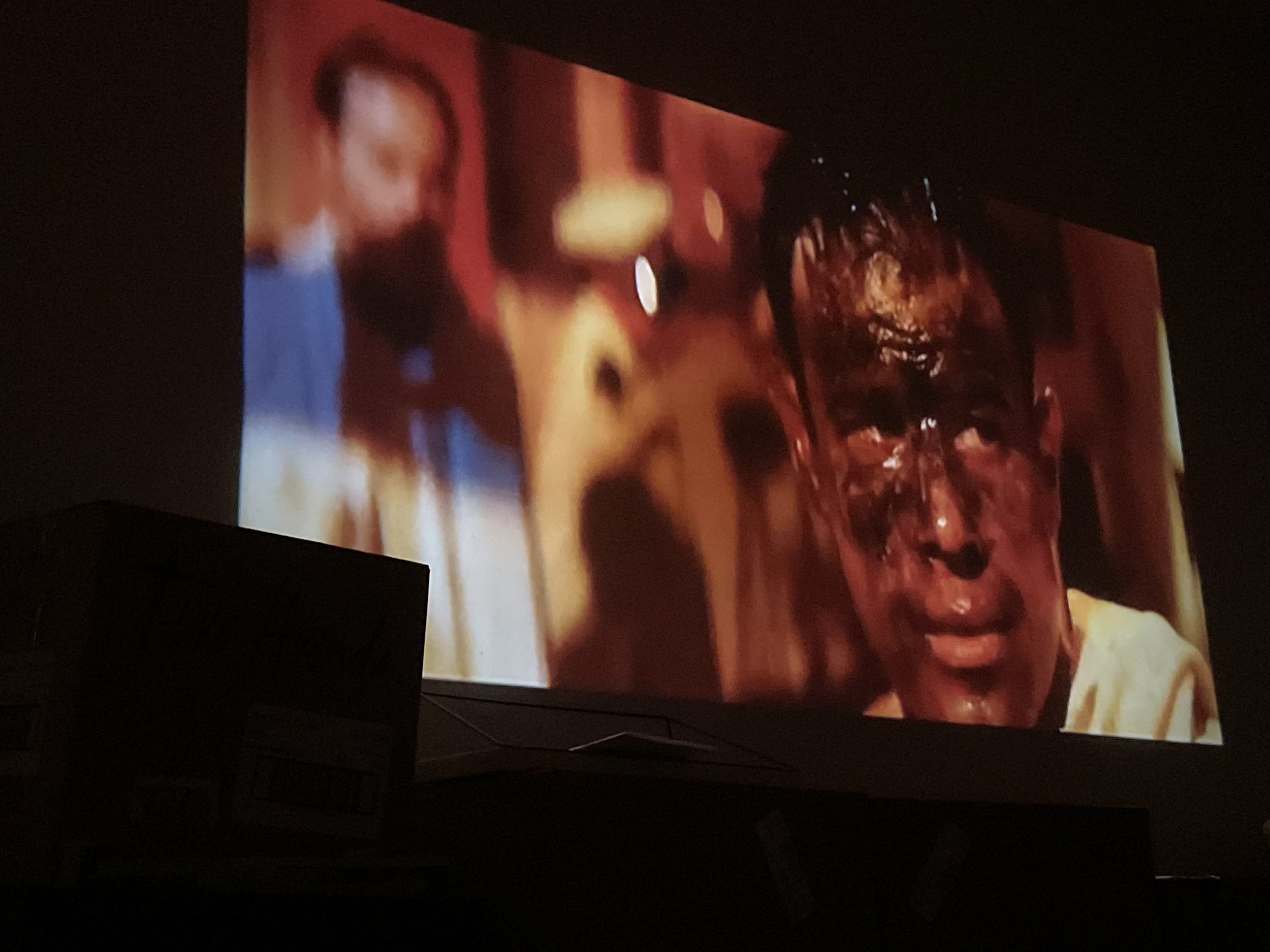
That was weird: that’s Querelle the shot right after bottoming for a Black dude. Coincidence? I dunno man. I’m just a Black woman on the Internet.
Just like in ENFANT TERRIBLE—and I wonder if it’s a Fassbinder thing—the opening credits were ridiculously long. Everyone is credited, every single crew member. For instance, this shot appeared 10 minutes into the film.
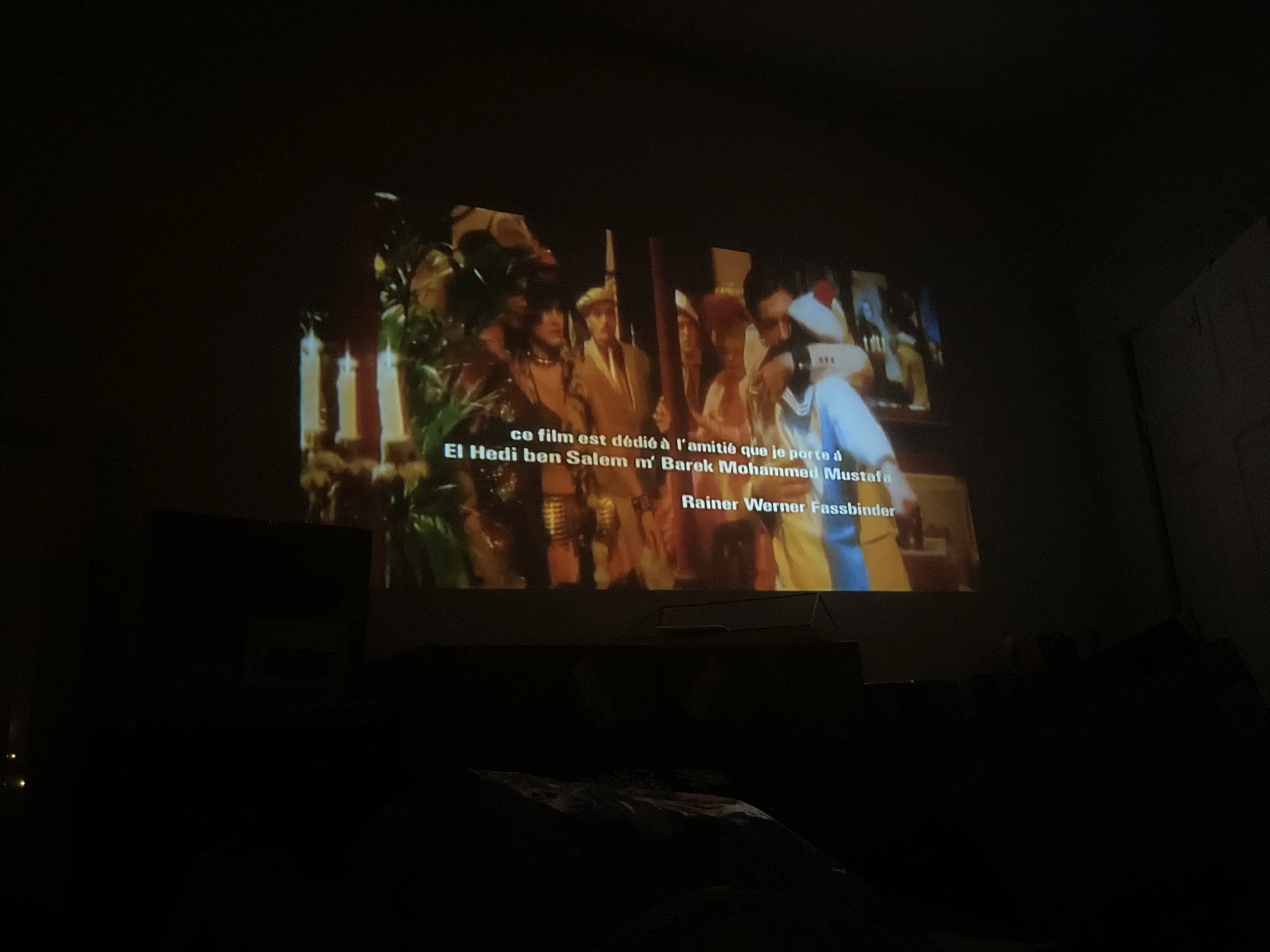
Fassbinder dedicates this film to his friendship with an Arab man whose entire name he puts on screen: El Hedi ben Salem m’Barek Mohammed Mustafa. Queer Arab representation or outing? I don’t know. But that sentence wouldn’t fly in today’s world. Schade, ne?
Oh, I’ve just looked him up: El Hedi ben Salem m’Barek Mohammed Mustafa was Fassbinder’s lover and the unforgettable face of ALI: FEAR EATS THE SOUL (1974). He was a Moroccan immigrant with no previous acting career and he became the vessel through which Fassbinder explored the violence of racism, social exclusion, and the fragility of love between outsiders. He had a brief but powerful presence in Fassbinder’s cinema and he died in prison in 1977. Dayum. Now I want to learn more about this guy too. Looks like QUERELLE won’t be the last Fassbinder movie I’ll watch.
Also, I wonder why the title cards and text inserts are in French, while the film is shot in English. The director is German, the cast is international: Brad Davis who is from the US plays Querelle, Franco Nero (Italian) is Lieutenant Seblon, Jeanne Moreau (French) plays Lysiane, Günther Kaufmann is German, and so on. As a result, much of the dialogue was performed in English by non-English-speaking actors.
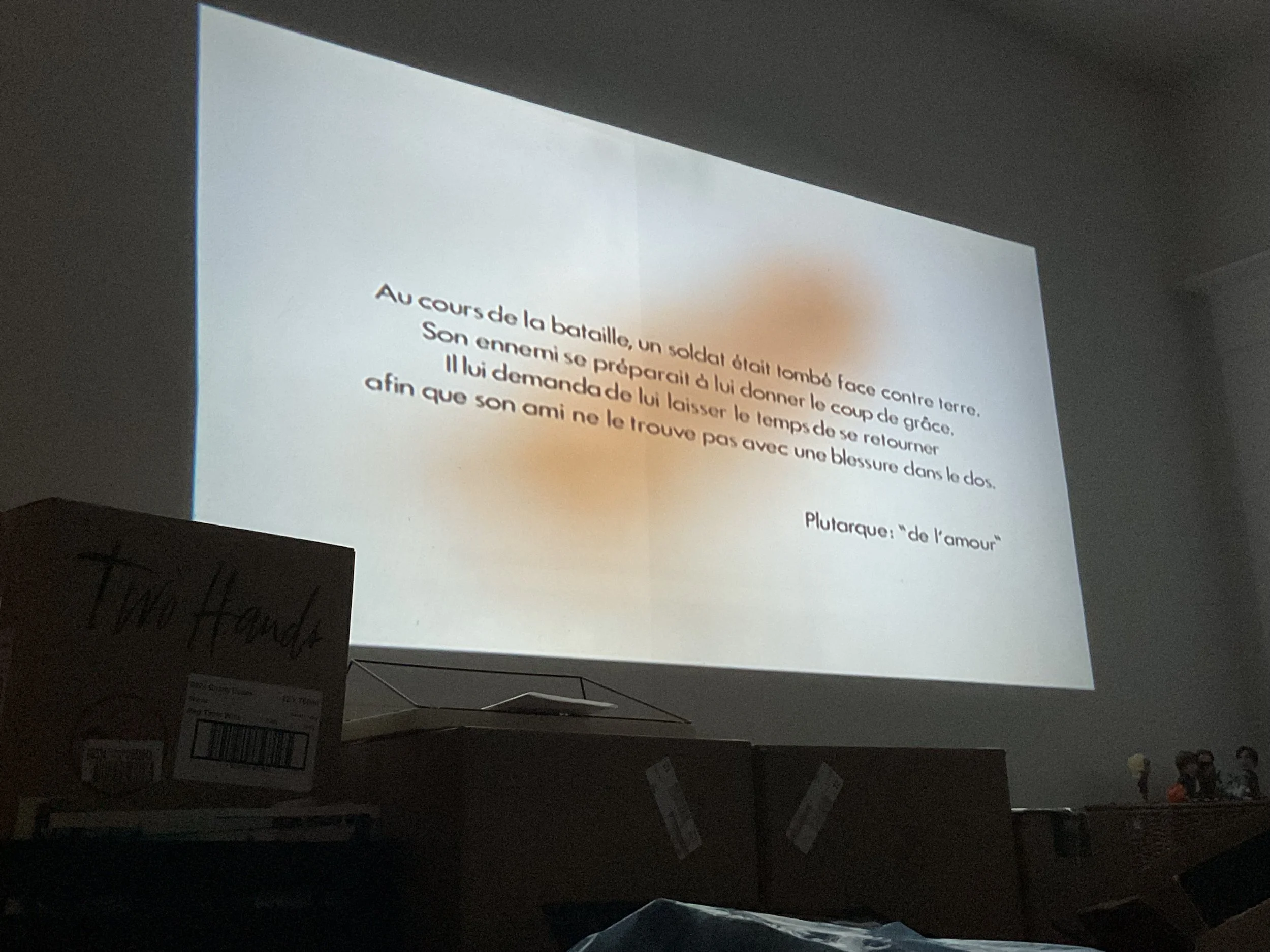
Even the defect that comes with my projector’s obsolescence has a phallic shape. It pains me to watch it slowly die. Here, the text says:
“During the battle, a soldier had fallen face down.
His enemy was preparing to deliver the final blow.
He asked him to give him time to turn over, so that his friend would not find him with a wound in his back.”
— Plutarch, On Love
The costumes are so surreal. So Village People. So camp. I felt like I was in a hypersexual gay man’s wet dream.
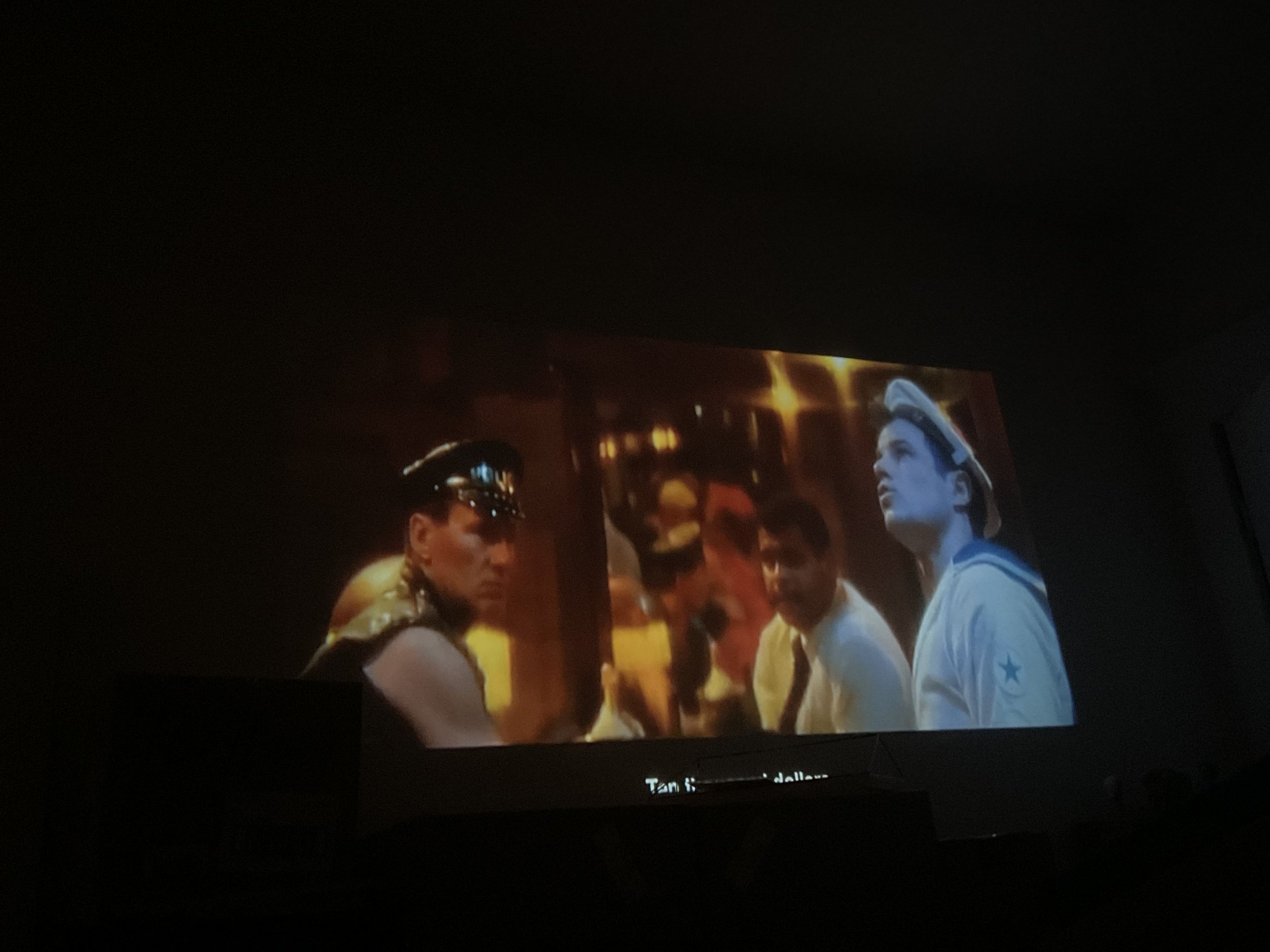
And you haven’t seen the miners and their helmets yet.
Bruh, don’t ask me what happens in that film. All I know after sitting through it and falling asleep sometime after what I think was the second murder is that it’s an adaptation of Jean Genet’s 1947 erotic novel QUERELLE DE BREST, about a U.S. Marine on shore leave in Brest who is desired by his lieutenant and sodomized by a very strong man who enjoys sodomizing other men and is unapologetic about his desires. And every young man in the book ends up being the object of an older man’s desire.
Now I want to read the book. Maybe Genet did write “Young man needs boys with big cocks” after all…
Up next on my watchlist: a queer romance that starts with R, a straight romance that starts with S and a biopic that starts with T!